

A Wicket Wire is a ∏-shaped wire form, typically made of galvanized wire of 2mm or 3mm diameter. It is used in the packaging industry to hold together a block of thin plastic bags which are loaded into a machine to pack bread or other food products in a bakery or food processing plant, or torn off the wicket manually to pack food in a retail environment.
Wicketed bags are an environmentally friendly solution to a high-volume disposable packaging problem, as the thin plastic bags are biodegradable and the wickets are recyclable.
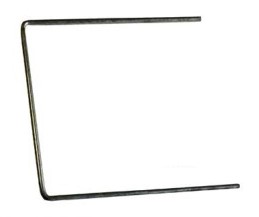
Wicket Wire is made in a variety of sizes with legs or prongs that can be longer, shorter or equal to the body length depending on the application.
Typical configurations are:
- 75 x 75 x 75mm;
- 100 x 75 x 100mm;
- 100 x 125mm x 100mm and
- 125 x 150 x 125mm.
Wicket Wires are supplied in banded bundles packed in cardboard boxes containing a total of 1000 pieces.
NOCKERS ENGINEERING PRODUCTS supplies Wicket Wires made in South Africa with good lead times to leading packaging companies in Africa.
Contact us for more information
The majority of motor vehicles on the road today have features that were either expensive luxuries or not even conceived of a decade ago.
Many of these features incorporate devices that are electrically operated and we don’t give a thought about what connects power to the operating component when we use them.
The majority of these connections are not yet “wireless”, but use the age-old technology of insulated flexible fine copper wires to connect power source (battery), switch and device (light-bulb, heater, servo-motor or instrument).
The number and diameter of the fine copper wires in each strand are determined based on the power requirements of each individual circuit and they are then insulated, cut to length, the insulation stripped back at each end, and the strand fitted with the required terminals or connectors.
Individual cables are then assembled and clamped together on a special workbench or assembly board which replicates the spatial and geometric layout of a particular vehicle model. Various combinations of individual cables are then bound with protective sleeves, extruded yarn tape or threaded into conduits, depending on their placement within the vehicle, to form the completed cable harness.
This process is difficult to automate and remains a manual operation requiring highly skilled technicians, but the advantage comes later in the vehicle assembly process where one harness can be installed rather than multiple individual wires.
A cable harness must possess electrical integrity, mechanical strength, low weight, flexibility where necessary, and impact and fire resistance. The harnesses are specified and tested according to stringent vehicle manufacturer and international specifications.
Spare a thought for the humble harness when on your next daily commute.
NOCKERS ENGINEERING PRODUCTS supplies fine copper wire strands to some of the leading automotive cable manufacturers in South Africa.
Whether for electrical or mechanical applications we supply the specialized wires that drive modern developments.
Copper-nickel and nickel-chrome heating wires manufactured to international specifications have tolerances on resistance in a range of 5% - 10% in a typical diameter size range of 1.00mm to 0.10mm.
Many precision wire applications require much closer resistance tolerances of 1% to 2%, which requires much more attention to process control and monitoring as well as a high degree of testing and sorting.
NOCKERS ENGINEERING PRODUCTS have worked with our heating wire principals to produce to this exacting standard and to sort further into batches of spools having identical resistance in ohms per metre.
The wires we supply to our customer are further sampled before being heat soaked and tested at various temperatures above ambient to confirm absolute material stability. This is only possible with the use of virgin materials in the original alloy melt, as contaminated copper from scrap addition to the melt, for instance, would result in them not being able to achieve the high standards required.
Through our different wire principals we are able to offer our customers the flexibility to choose appropriate wire standards to meet their needs to enable them to improve their own products as well as make them more competitive in the market.
Enquire about our Heating wire
We are pleased to announce that the company EDD - EKSI DORSTENER DRAHT of Altena, Germany, a members of the DORSTENER DRAHTWERKE Group of Companies has been added to our portfolio of specialized wire suppliers.
Our Managing Director, Mike Hardisty, recently visited their factory to conduct an audit and discuss on-going co-operation.
EDD and DORSTENER DRAHTWERKE are regular exhibitors at the bi-annual WIRE® Dusseldorf, where we first made their acquaintance some years ago.
EDD have the ability to produce high quality wire materials at a consistent quality and price as well as comply with customers’ special requirements.
We look forward to expanding business opportunities together with EDD in automotive and safety-critical manufacturing industries.